
|
HOME ABOUT LISA BERRY CONTACT INFO GIFT IDEAS LINKS REVIEWS REFERENCES Alpine Buttercup Alpine Gold Alpine Heather Alpine Lily Brown's or Wild Peony Camas Lily Corn Lily Crimson Columbine Elephant Heads Great Red Paintbrush Green Gentian Large-Leaf Lupine Little Elephant's Head Mariposa Lily Monkshood Mountain Bluebells Mountain Jewelflower Prairie Smoke Ranger Buttons Red Mountain Heather Rock Fringe Rosy Sedum Showy Penstemon Sierra Gooseberry Sierra Primrose Sierra Shooting Star Sierra Wallflower Snowplant Steer's Head Swamp Onion Towering Larkspur |
 Scientific name: Veratrum californicum
Common name: Corn Lily or False Hellebore Family: Lily Color: White with greenish centers. Description: The 4 to 8 feet tall stalk, and many branching arms, are covered with tightly clustered 3/4-inch flowers with green centers. Habitat: Wet meadows, creek beds, and drying swamps and marshes. Toxicity/Edibility: The alkaloids in this plant make it extremely toxic to humans, livestock, and even insects. Ingestion has caused birth defects in animals, and losses in honeybee populations. Medicinal uses: Historically, corn lily was used as a pain reliever and anti-convulsive (for epilepsy). Native Americans concocted an effective a birth control tea from the roots. Today it is used pharmaceutically to slow the heartbeat and lower blood pressure. Comments: Because the leaves resemble those of corn stalks and edible "skunk cabbage," corn lily has been eaten mistakenly with fatal results--the alkaloids paralyzing the respiratory system. Native Americans used the juice to poison darts for warfare, and the powdered root made an effective insecticide. 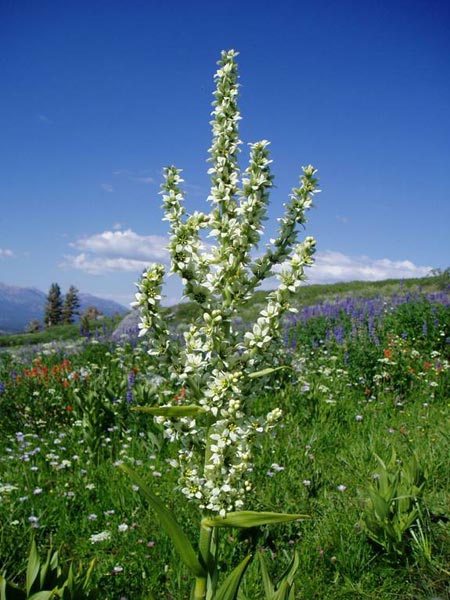 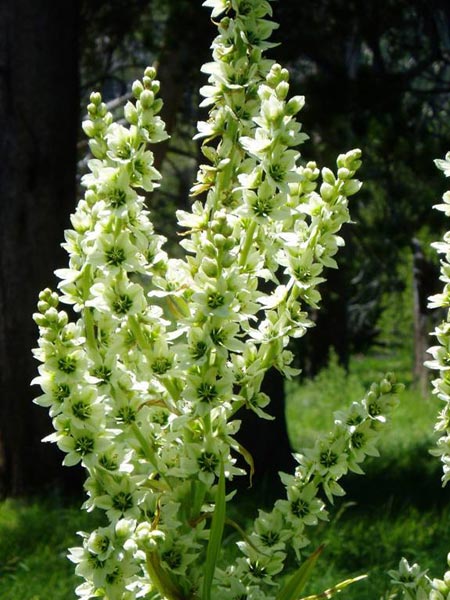 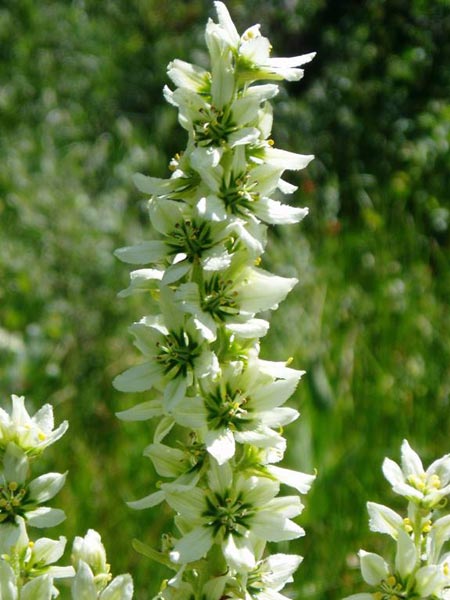 |