
|
HOME ABOUT LISA BERRY CONTACT INFO GIFT IDEAS LINKS REVIEWS REFERENCES Alpine Buttercup Alpine Gold Alpine Heather Alpine Lily Brown's or Wild Peony Camas Lily Corn Lily Crimson Columbine Elephant Heads Great Red Paintbrush Green Gentian Large-Leaf Lupine Little Elephant's Head Mariposa Lily Monkshood Mountain Bluebells Mountain Jewelflower Prairie Smoke Ranger Buttons Red Mountain Heather Rock Fringe Rosy Sedum Showy Penstemon Sierra Gooseberry Sierra Primrose Sierra Shooting Star Sierra Wallflower Snowplant Steer's Head Swamp Onion Towering Larkspur |
 Scientific Name: Pedicularis Attollens
Common Name: Little Elephant's Head Family: Figwort Color: Pink, occasionally White Description: The two upper petals form a curved trunk, while two lower petals flare into ears with a red-purple streak. The leaves are fern-like. The 4 to 12 inch spike is covered with white hairs. Habitat: Moist Meadows Edibility/Toxicity: Though the leaves of this plant have been enjoyed as a parsnip-flavored snack, ingestion is not recommended as this plant is partially parasitic and may be attached to a poisonous host. Medicinal uses: This genus is recognized by modern herbalists as a mild sedative and muscle relaxant. Historically it was used to treat stomach ulcers, rheumatism, and urinary problems. Ojibwa Indians considered it an aphrodisiac. Comments: While both elephant head species look like elephant heads stacked atop each other, and both species have fern-like leaves, they do have distinguishing features. This species is covered with white hairs, and the "trunk" is a lighter color�white to pink, rather than dark pink-red. 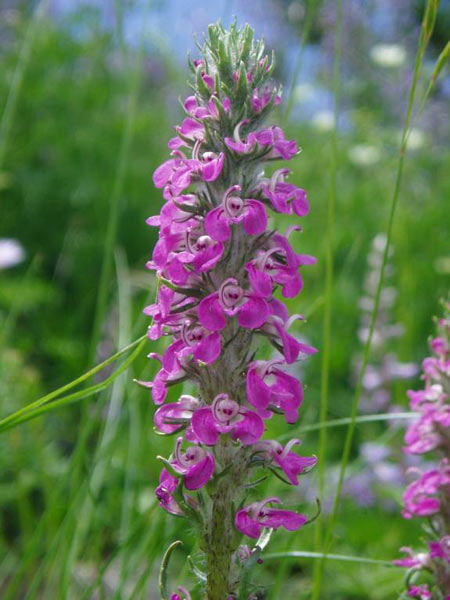 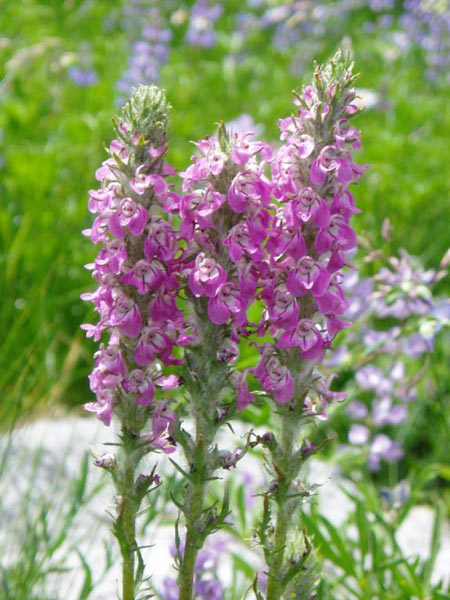 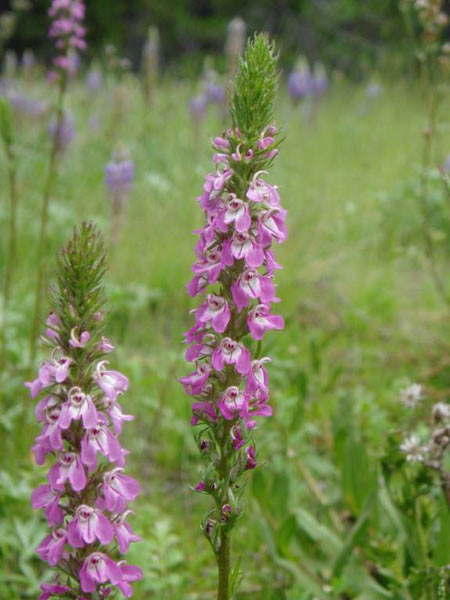 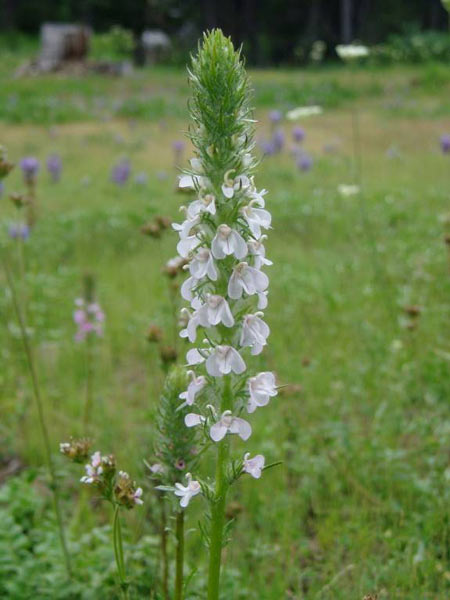 |